Knots











For
every
task
that
requires
a
knot,
hitch,
or
bend,
there is an ideal type suited for the job.
Knots generally fall into three main categories.
1
.
Knots tied at the end of a line. aka Knots
2
.
Knots to join two lines together. aka Bends
3
.
Knots to secure a line to something, aka Hitches




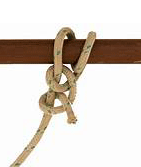
The
Round
Turn
and
Two
Half
Hitches
is
used
to
secure the end of a rope to a fixed object.
The
name
refers
to
the
components
used
to
form
the
knot:
a
round
turn
wraps
the
rope
around
the
object,
completely
encircling
it,
and
the
two
half
hitches
secure the end around the standing part.
Excellent
for
securing
a
rope
to
a
post
or
stanchion.
Quick
and
simple,
Easy
to
undo.
It
retains
75%
of
the line strength.
If
you
only
have
two-half
hitches,
missing
out
the
turn,
this
can
be
challenging
to
untie,
and
you’ll
need to bend them apart to untie them.
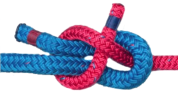
A
Sheet-bend
is
used
to
joins
two
ropes
together.
It
is
practical
for
joining
lines
of
different
diameters
or
rigidity.
For
increased
security,
it
is
sometimes
recommended
that
one
add
another
turn
making
a
double sheet-bend.
It
is
quick
and
easy
to
tie,
Good
for
heavy
loads.
Will
not
slip
when
you
apply
heavy
tension.
Ropes
can
be
of
different
diameter
recommended
for
joining two ropes of unequal size.
Works
equally
well
if
the
ropes
are
of
the
same
size.
The thicker rope must be used for the simple bight.
It tends to work loose when not under load.
If
put
under
cycling
loads
(where
the
loop
isn’t
loaded all the time), it can eventually come undone.
Tying
a
stopper
knot
after
the
Bowline
is
important
when used for intermittent loads.
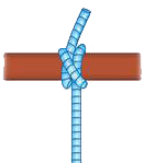
The Clove Hitch’s usefulness is stringing up items.
Offers
a
secure
hold
around
a
rounded
cylindrical
object .
Less
effective
and
more
insecure
when
tied
around
a
square-edged post
The
big
advantage
of
the
clove
hitch
is
that
it
can
be
loosened
relatively
easily,
even
after
it’s
been
tied
tightly.
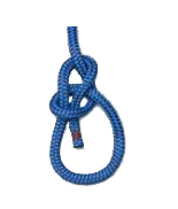
The
Bowline
is
a
versatile
strong
knot
to
form
a
loop,
large
or
small,
easy
to
tie
and
untied,
that
everyone
should
know
how
to
tie.
it
can
even
be
tied
one
handed.
Once
put
under
load,
it’s
very
unlikely
to
come
undone or jam.
Very
easy
to
untie
if
the
rope
isn’t
loaded
Unfortunately,
its
ability
to
easily
untie
is
also
its
main downside.
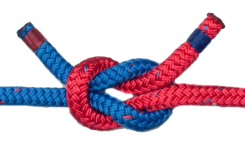
The
reef
knot,
also
known
as
a
square
knot,
consists
of
two
half
knots,
one
left
and
one
right,
one being tied on top of the other.
Best
used
to
keep
an
object
or
multiple
loose
objects
together
after
passing
at
least
once
around
them.
It
is
an
insecure
knot,
unstable
when
jiggled,
and
is
not suitable for supporting weight.
If
tied
with
two
ends
of
unequal
size,
or
if
one
end
is
stiffer
or
smoother
than
the
other,
the
knot
is
almost bound to come undone

- MVS
- Maritime Studies
- Able Volunteer
- Foundation
- Induction
- Introduction
- Leading Volunteer
- Role of LV
- Collision Regs 11 - 31
- Rule 11 - Vessels insight
- Rule 12 - Sailing vessels
- Rule 13 - Overtaking
- Rule 14 - Head on
- Rule 15 - Crossing
- Rule 16 - Give way
- Rule 17 - Stand-on
- Rule 18 - Precedence
- Rule 19 - Restricted visibility
- Rule 20 - Application
- Rule 21 - Definition Lights
- Rule 22 - Visibility - Lights
- Rule 23 / 31 - Lights & Shapes
- Rule 32 / 37 - Sound & Lights
- Navigation Part 2
- Pathway
- MVS
- Introduction
- Induction
- Foundation
- Able Volunteer
- Leading Volunteer
- Detail
- Role of LV
- Collision Regs 11 - 31
- Detail
- Rule 11 - Vessels insight
- Rule 12 - Sailing vessels
- Rule 13 - Overtaking
- Rule 14 - Head on
- Rule 15 - Crossing
- Rule 16 - Give way
- Rule 17 - Stand-on
- Rule 18 - Precedence
- Rule 19 - Restricted visibility
- Rule 20 - Application
- Rule 21 - Definition Lights
- Rule 22 - Visibility - Lights
- Rule 23 / 31 - Lights & Shapes
- Rule 32 / 37 - Sound & Lights
- Navigation Part 2
- MVS
- Introduction
- Induction
- Foundation
- Able Volunteer
- Leading Volunteer
- Detail
- Role of LV
- Collision Regs 11 - 31
- Detail
- Rule 11 - Vessels insight
- Rule 12 - Sailing vessels
- Rule 13 - Overtaking
- Rule 14 - Head on
- Rule 15 - Crossing
- Rule 16 - Give way
- Rule 17 - Stand-on
- Rule 18 - Precedence
- Rule 19 - Restricted visibility
- Rule 20 - Application
- Rule 21 - Definition Lights
- Rule 22 - Visibility - Lights
- Rule 23 / 31 - Lights & Shapes
- Rule 32 / 37 - Sound & Lights
- Navigation Part 2